The bedroom has a completely different atmosphere just by the fact of your feet touching something soft instead of cold flooring. This scenario is very tiny, almost unnoticeable, yet it subtly tells the reason why wall-to-wall carpeting still matters—mainly in bedrooms. The very first step out of bed determines the emotional mood of the day. Softness indicates tranquility. On the other hand, hard surfaces don’t.
In Dubai’s residential properties, where air conditioning is usually on almost all year round, the difference becomes even more striking. A bedroom with carpet absorbs sound, equalizes temperature, and quietly slows the movement of the area. It is not making noise; rather, it couples with the room and takes over the general mood of the room day after day.
This manual clarifies the rationality behind bedroom carpets in Dubai. Sound, comfort, safety, visual balance, choice of materials, installation methods, care, and cost thinking will be discussed but not to the point of getting lost in technical jargon. You may have considered this as a well-grounded tour for a flooring choice that unobtrusively supports your everyday life.
Why Choose Wall to Wall Carpet for Your Bedroom
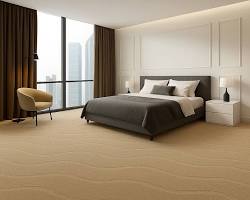
Bedrooms are places for recovery. These aren’t high-traffic areas, and neither they need to be hot nor noisy. Naturally, wall-to-wall carpet contributes to this purpose. The whole floor is covered with it, which means not only hard borders are gone but also there is a feeling of a unified surface that is more comfortable than a divided one.
Carpet, from the point of view of sound, absorbs sound waves and does not reflect them. Footsteps are quieter. Voices do not return. External noise sounds less loud. This is important in case of apartment complexes, open-plan villas, or houses located near busy streets.
Temperature is another factor that contributes to this situation. In Dubai, cold tiled or marble floors can be especially uncomfortable for winter mornings when a person is used to the indoors being cooled constantly. Carpet is a thermal barrier that is very much like the one we experience and so subtly keeps the heat isolated down. The outcome is not a showy one but rather a pleasant one, which is the aim anyway.
Top Benefits of Bedroom Wall to Wall Carpets
Consistent Comfort
Every step is cushioned with fibers which make barefoot movement easier and less painful.
Noise Absorption
Carpet absorbs sound and thus prevents echoes and minimizes noise from footsteps.
Thermal Stability
The air held within the fibers is instrumental in temperature regulation under air-conditioning conditions.
Enhanced Safety
The cause of the severity from falls and missteps is lessened by soft flooring, especially in the case of children and elderly residents.
Visual Continuity
Having a single surface throughout the room provides a unified visual field and thus lessens the perception of clutter.
All the benefits are quietly working. None of them are demanding attention, but they are reshaping the bedroom’s function together..
Understanding Carpet Types Used in Dubai Bedrooms
Not every carpet behaves alike. The touch, strength, and look are decided by fiber structure, density, and pile design. The proper selection means the right choice if one knows how the room is going to be used.
Plush Carpets
These are characterized by the dense and uniformly cut fibers that together give a smooth and velvety surface. They are gentle to touch and are perfect in bedrooms where comfort and calmness are the main concerns.
Loop Pile Carpets
The loomed fibers create a tough and structured surface. They are very wear-resistant and their appearance does not change throughout their lifetime which makes them suitable for the bedrooms where there is moderate movement.
Textured Carpets
The use of different heights of fibers or different patterns in carpets gives the carpets the power to make the footprints and shading less visible. They contribute to the room with depth but without visual disturbance.
Wool and Wool-Blend Carpets
Wool is a material that has the ability to naturally regulate the temperature and to not easily get flattened. Blends offer a combination of this resilience with easier maintenance, thus supplying the balance between comfort and practicality.
The right decision ultimately depends on lifestyle, texture sensitivity, and the actual use of the bedroom not the showroom look.
Choosing the Right Density and Pile Height
Softness does not necessarily equate to longevity. Ultra-high piles might provide a feel of luxury but lose their thickness at a faster rate. Denser carpets with moderate pile height are usually the ones to retain their shapes for a longer period whilst still offering comfort.
In the case of Dubai bedrooms, balance is of greater importance than extremes. A carpet with excellent initial comfort should retain the same quality after several months.
Color and Style Considerations for Bedroom Carpets
Color is the most important element in the perception of a room, far more than furniture arrangement. In bedrooms, the aiming target is visual rest.
Neutral Shades
Cream, beige, taupe, and soft gray tones bring about serenity and transparency. They are very efficient in gently reflecting light and quickly adapting to changes in décor.
Darker Tones
Very dark blues, charcoals, or wine shades create a feeling of intimacy even in bigger bedrooms. They help to anchor the space and at the same time do not overpower it.
Subtle Patterns
Very low-contrast designs contribute to the beauty of the room while keeping it visually stable. They also make the wear on the fabric less noticeable over time.
Consistency is of great importance. Matching the color of the carpet with that of the curtains, bedding, and walls gives the room an intentional look rather than a haphazardly put together one.
Installation Process: What Happens Behind the Scenes

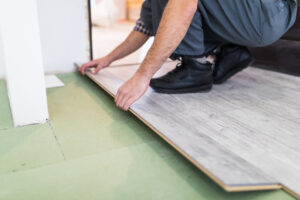
The carpet’s behaviour in the long run will be influenced by the proper installation. It will take accurate measuring, and the next to be done is subfloor preparation, making sure the floor is clean and even for the installation of the carpet.
Then the underlay gets installed, giving support and cushioning. And the carpet is then stretched and fixed so that its edges are flush with the walls and no ripples or marks from the tension are visible. The carpet feels like it is disappeared if the installation is done properly because it has been done so well.
Habitually, in Dubai’s residential areas, the bedroom carpets are laid in no time, and there is almost no disturbance at all especially when done by the skilled crew.
Daily Care and Long-Term Maintenance
Caring for carpets doesn’t mean becoming obsessed, it just needs to be consistent.
Vacuuming regularly eliminates dirt and very fine sand which are found in Dubai surroundings. Attending to spills straight away will stop staining from happening. Cleaning carpets deeply every now and then makes fibers anew and keeps the air indoors clean.
Such habits keep the look and feel of carpets without requiring an effort that is constant.
Cost Considerations for Bedroom Wall to Wall Carpet in Dubai
The prices depend on the materials used, the density of fibers, the quality of the backing, and the size of the room. Premium carpets, though, often have a higher price tag, but they are usually the ones that last the longest in terms of shape and comfort.
Low-price carpets may be good for short-term use, but their replacement will be more often than expected since the frequency is raising over the years. Thinking about the cost in terms of the longevity of the carpets instead of the initial prices will result in more appropriate decisions.
Is Wall-to-Wall Carpet the Right Choice for Your Bedroom?
Is it really true that one particular surface can have a genuine daily effect on the feel of a bedroom? The answer is yes—and it is a rather unobtrusive way. A carpet that covers the entire floor area of the room influences sound, warmth, security, and emotional comfort but without asking for notice.
For such bedrooms where the main focus is sleeping, privacy, and comfort, carpet is not just a manner of performing the decoration task. It is only to the extent that the space supports everyday living, one foot at a time.